

The uncertain future
of the global AIDS response

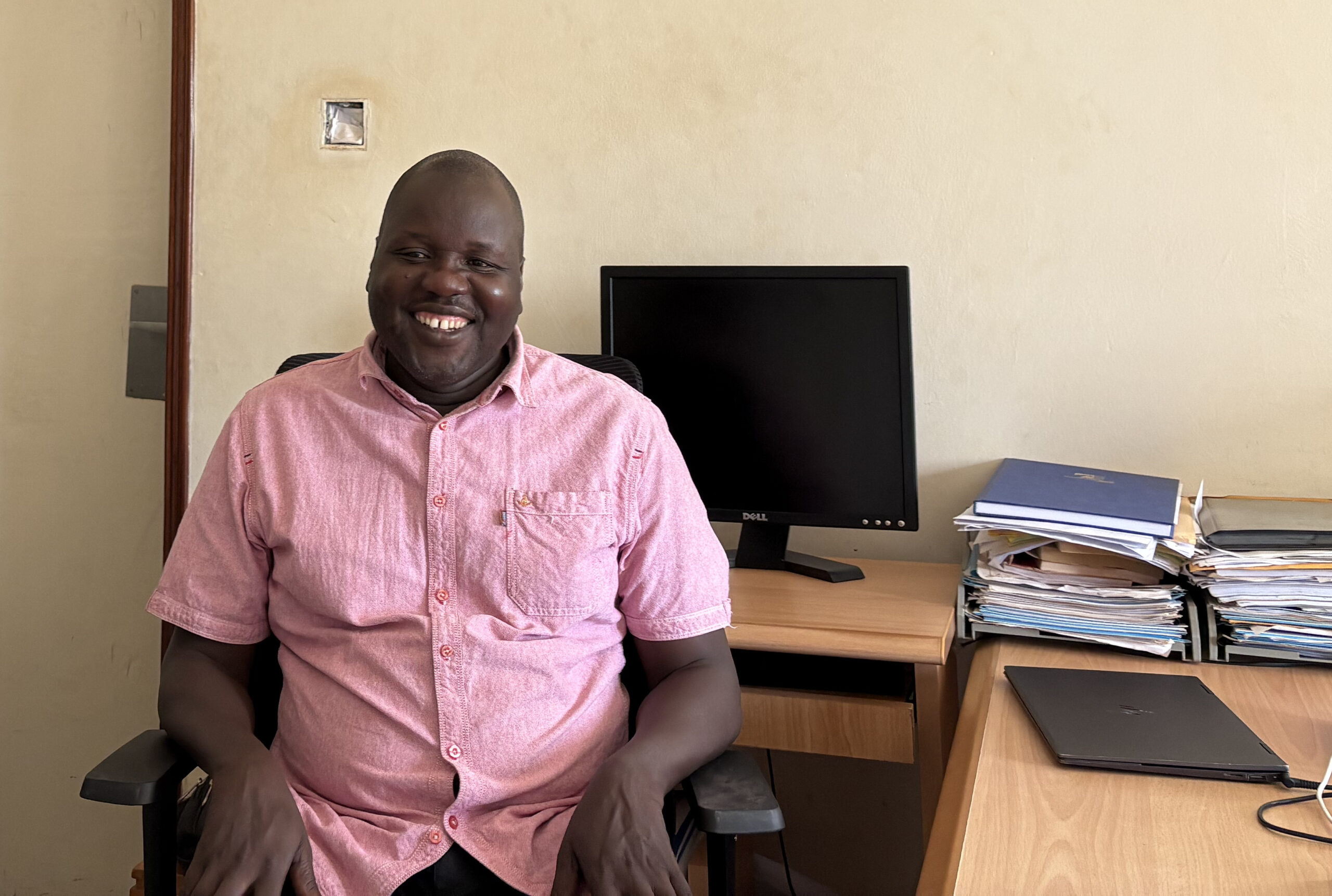
Walter Okema

Location: Gulu |
Date: 04/07/2025
Center program manager of The AIDS Support Organisation Gulu
“It is also challenging to say we are closing, and where do we leave all these number of clients?”

The AIDS Support Organisation arrived in Gulu at the height of the Lord’s Resistance Army’s insurgency.

Led by a deranged prophet, Joseph Kony, the LRA ostensibly sought to overthrow Uganda’s government. The insurgency’s initial field of battle, though, was northern Uganda, hundreds of miles from the capital, Kampala.

Beginning in the early 1990s, Kony would loose his fighters on the region’s villages and towns, murdering adults and kidnapping their children. He would force the abductees into his ranks. If they refused, he would order other children to kill them.

The Ugandan government’s response was to force people from their homes into camps hastily constructed in the region’s towns and cities. The camps would be easier to defend, officials promised civilians. Instead, they became slaughtering grounds. Over and over, Ugandan troops melted away in the face of LRA assaults, leaving defenseless civilians to be massacred.

HIV descended on the region alongside this carnage. The disease was sped along by desperate people suddenly crowded into inhumane conditions. It was in 2004, in the midst of this suffering that TASO, a homegrown AIDS support organization, opened a branch in Gulu.

Walter Okema was one of the first employees.

Personally, I lost my guardian who was paying me in school due to HIV. I really felt the need to work with this organization, support the people.

TASO’s first task was to educate people about the disease. Because communities didn’t understand the disease or how it spread, they were shunning people as they fell ill.

We started when the war was at its peak. And at that time, stigma was at its peak. HIV was not so much known. Or how to handle it.

When TASO Gulu came, some clients were being dropped just at our gate. You can walk up in the following morning to work and you find somebody lying at the gate. You don’t know who brought the person

We trained our own clients who had lived well with HIV, and then we would go out to the community every week to sensitize people in the community.

TASO Gulu extended those efforts as the LRA retreated from northern Uganda in the mid-2000s. The center’s membership exploded, though, with the expansion in access to life-saving HIV treatment the following decade. As people learned of the drugs that could transform HIV from a death sentence to a chronic, but manageable condition, TASO Gulu’s clinic was inundated.

It has saved many people’s lives. Their health improved. They started at least doing other things that they used not to do because the energy is there.

At the moment, TASO Gulu here has the biggest number of clients compared with other TASO centers. We have about nine thousand clients. There would be a lot of death by now. A lot of death. So this is really a big, big achievement.

That is more clients than the neighboring reference hospital, which is the largest government-operated facility in northern Uganda.

In 2017, Okema says TASO Gulu began drawing support from the U.S. Agency for International Development. USAID was soon funding virtually all of the organization’s work. That includes testing for HIV and for the drugs that treat it, but also distributing medicines to prevent transmission of the disease and for programs to assist people facing violence within their homes.

We were optimistic that come 2030, we could achieve the epidemic control1, given the different interventions that were also coming.

These included long-acting injectable forms of the prevention medicine, which TASO Gulu was hoping to be able to offer to its clients.

When President Trump initially issued his order pausing all U.S. support for HIV services in January 2025, Okema thought TASO Gulu could weather the interruption.

It is also challenging to say we are closing, and where do we leave all these number of clients? According to the Trump’s order, they said they are evaluating for 90 days. So these staff are volunteering and they wait for the final outcome, maybe after the 90 days.

By March, Okema had received word that TASO Gulu had lost all USAID support. The decision was perplexing, not only because the organization is the largest provider of HIV services in the region, but also because smaller TASO centers in other parts of the country had their funding restored.

Okema had no choice but to start shutting down programs. That included prevention services. Even though stocks of treatment were still available, TASO clinicians began referring any concerned clients to the hospital next door. Its programs, which rely primarily on government funding, were still operating.

The center even had to shutter its service to deliver medicines to remote clients, though they knew those people would struggle to continue to access the drugs. The motorcycles that were used for the deliveries piled up in a courtyard in TASO Gulu’s lobby.

Even as he oversees the disintegration of TASO Gulu, Okema is still searching for some approach or opportunity that would keep the center open.

What I know is that TASO is a going concern. The people who started TASO, they started on voluntary basis. And the most challenging thing might be the drugs. But for now, we are giving our clients their drugs. I think nobody has missed a drug since that order came. We are looking for mechanism of how to serve them and enrich them.

We don’t know what will happen from now until when the drugs are done. We just need to innovate locally to see how we can mobilize resources. To involve the clients themselves, in mobilization of resources.

If the government can come in to supply the drugs and maybe take care of the staff that are here, then I believe the facility will have to continue. It is the worst-case scenario where the clients have to now be transferred to other public facilities.

1 Reducing new infections and AIDS-related deaths to very low, stable levels

Newsletter

For exclusive reporting on the impact of the U.S. aid cuts, subscribe to a free newsletter